LOSS Team
The Local Outreach to Suicide Survivors (LOSS) Team model, pioneered by Dr. Frank Campbell in 1997, is a nationally recognized postvention strategy. LOSS Teams offer on-scene, peer-based support to newly bereaved survivors, often within hours of a suicide.
Introduction
LOSS stands for Local Outreach to Suicide Survivors. A LOSS Team is an active model of postvention (support after a suicide), in which two or more trained volunteers — often including a survivor of suicide loss — respond to the scene of a suicide to offer immediate, compassionate support to those left behind. Their presence provides survivors with practical assistance, connections to helpful resources, and, most importantly, a sense of hope in the midst of profound grief.
The LOSS Team model, pioneered by Dr. Frank Campbell in 1998, is a nationally recognized postvention strategy. LOSS Teams offer on-scene, peer-based support to newly bereaved survivors, often within hours of a suicide.
The LOSS Team model is rooted in peer support. Having a volunteer who has personally experienced the loss of a loved one to suicide reach out to a newly bereaved survivor fosters connection and understanding. A simple statement like, “I lost someone to suicide, too,” gives the grieving person permission to speak openly, to say the word suicide, and to know they are not alone. In that moment, the seeds of healing and hope are gently planted.
If you are looking to see if there is a LOSS team near you, visit this map to learn more.
Benefits of a LOSS Team
LOSS Teams support suicide survivors by providing emotional guidance and resources and reducing isolation. Postvention is considered a preventive measure because it helps lower the risk of additional suicides, offering survivors the support they need and preventing further trauma.
Key Features a LOSS Team Can Offer:
- Resource Connection: Provides information on mental health services, counseling, support groups, and other helpful resources.
- Immediate Response: Collaborates with law enforcement, coroners, and/or first responders for rapid alerts to respond to a suicide in a community.
- Peer Support: Members of the team are suicide loss survivors themselves, so they can offer understanding, reducing isolation for new survivors.
Interested? Join us!
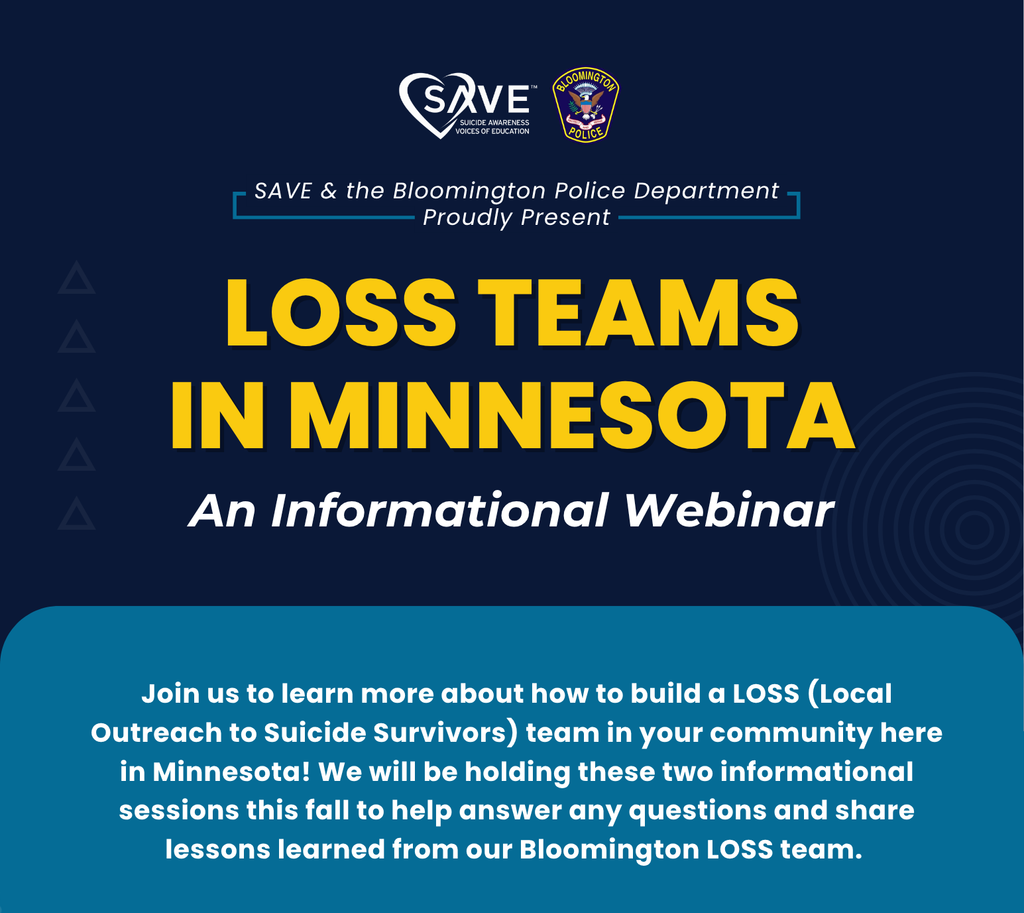
Join us to learn more about how to build a LOSS (Local Outreach to
Suicide Survivors) team in your Minnesota community. These two
informational sessions aim to help answer any questions about
launching a successful LOSS Team, as well as to share lessons learned
from the experience of managing the Bloomington LOSS Team.
Session 1: September 22, 2026 from 12 PM to 1:30 PM
Session 2: October 6, 2026 from 12 PM to 1:30 PM
Bloomington LOSS Team
The Bloomington LOSS team in the first LOSS Team in Minnesota. SAVE and the Bloomington Police Department partnered up to create this team. We activated our team in July of 2025 and are in the community support individuals after a suicide loss. The goal for response time is within one hour of getting the call or up to three days depending on team availability. The Bloomington LOSS team will provide local resources to survivors and help connect with them for a year in a half at designed intervals.
Do you want to join the Bloomington LOSS Team?
SAVE is still recruiting volunteers for the Bloomington LOSS team. If you’re ready to offer hope and healing to others walking a path you’ve walked yourself, or have a passionate to support others we’d love to hear from you.
Volunteer Requirements:
- Must be a suicide loss survivor, with at least two years since the loss of a loved one, or trained professionals (mental health providers, clinicians, counselors, first responders)
- Must be within 45 minutes of Bloomington while on call
- A valid driver’s license, auto insurance, and access to a personal vehicle
- A background check is also required to ensure safety and suitability for the role
Complete the application to get started below.
Connect to SAVE lives
We believe in the power of connection to create positive change. Whether you’re interested in volunteering, donating, or simply learning more about our mission, we invite you to get in touch.